PROCESS
I have two processes. One for how I design, and another for how I work on a team.
DESIGN
TEAM
Finding out what we know
To build a strong foundation, I begin by mapping out both the internal and external context of the problem space. I dive deep into competitor analysis, evaluating how our proposed MVP stacks up against industry benchmarks. My goal is to ensure we aren’t just matching the baseline capabilities of our competitors, but actively looking for opportunities to elevate the user experience—even within the constraints of an MVP release.

Competitive analysis generally consists of screenshots of all things relating to a customer's feature (e.g., YouTube video demos, website resources, articles)
Identifying the problem
Because my products exist within a complex, multi-product platform environment, I focus heavily on cross-product overlaps to prevent fragmented user experiences. I collaborate closely with our research, legal, and compliance teams to design highly structured user studies. Understanding that our dealers and customers have limited time, I ensure every research session is optimized with precise, high-value questions that yield actionable, platform-wide insights.

I made this spreadsheet template that holds questions on each row and note takers for each column. This enables note takers to see where the moderator is in a live session, and it gives the researcher multiple perspectives on the participant's answer to the question.
Designing for all needs
User research is a team sport, so I always bring my product and engineering partners along for the journey. I train them in research best practices, onboarding them as note-takers and observers, and even coaching them to moderate sessions if they want to build that skill. Once research is complete, I synthesize the data into actionable, customer-backed design decisions, rapidly generating early concepts using AI prototyping tools to establish instant alignment.
“
One of my top goals is to always keep my team in the loop. There shouldn’t be any surprises when the final design goes into production.
Collaborating with the right partners
With the conceptual direction aligned, I transition from low-fidelity wireframes and paper prototypes into high-fidelity designs. I strictly leverage our global design system tokens and pre-established components to ensure platform consistency. If a project requires a new UX pattern, I lead cross-team alignment sessions to publish it globally. I present these designs in local, platform, and product reviews to keep engineering, product, and compliance in lockstep.

One of my paper prototypes that I did with my tech and product partners to ensure we covering the right capabilities and had a smooth user flow.
Gathering approvals
Before handing off to engineering, I run my designs through meticulous legal, risk, and compliance checks to eliminate any downstream barriers. Accessibility is never an afterthought, so I conduct rigorous ADA compliance reviews to ensure the product is highly usable for everyone. By securing these critical approvals upfront, we protect the business and guarantee a smoother, lower-risk launch.
Putting it into production
When it’s time to build, I host a comprehensive handoff walkthrough to explain interactions, transitions, and complex states, actively collaborating with engineers to capture any hidden edge cases. Once developed, I conduct hands-on Design QA over 3 to 4 iterative cycles. We review animations, states, and layouts together until we achieve 1:1 pixel parity before pushing the product live to our users.

On top of recording my screen while doing VQA, I make a table of what is current state and what needs to be edited, and note which part I'm referencing with either a timestamp in my screen recording or the component name. To further clarify, I add in the Figma screens to show what it should look like.
GETTING AHEAD OF THE CURVE
When I identify some product enhancements, I go ahead and design for it as a potential future state. I use AI prototyping tools to rapidly ideate and show the interactions. If it's low-hanging fruit, I go ahead an add it into Figma. By creating visual artifacts, I'm able to leverage my design skills and present ideas to my partners to help create a stairstep or push and pull on roadmaps.
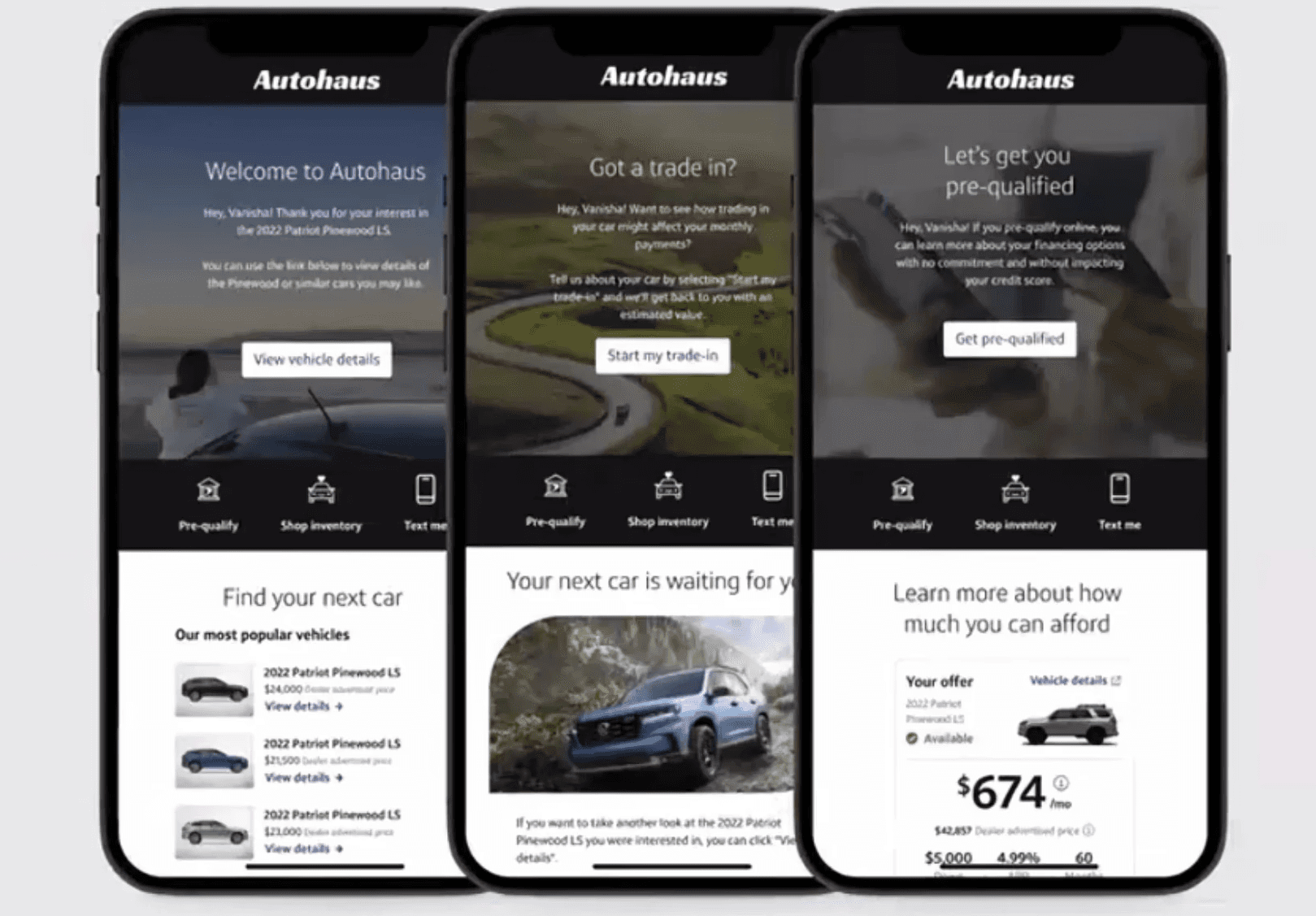
Mobile mockups of future email ideas for a vision state deck. These captured future capabilities that I thought would enhance the experience based on the data we do have on car buyers and dealers but aren't fully leveraging yet.
